Resources
Browse resources created and collated by ARIIA as a trusted, evidence-based guide to supporting innovation across the aged care sector.
Showing

Dementia care: Simulated presence therapy
Simulated presence therapy uses a personalised video or audio recording of a familiar, trusted voice to quieten and reassure people living with dementia when they are anxious or agitated. This resource from ARIIA is a short easy-to-read summary of the research evidence.

Dementia care: Responsive behaviours
There is some evidence that approaches such as music therapy, multisensory stimulation, massage and touch may influence responsive behaviours for people living with dementia. This resource from ARIIA is a short easy-to-read summary of the research evidence.

Dementia care: Respite care
Evidence from five systematic reviews showed that respite care reduced responsive behaviours and carer-related outcomes such as the impact of supporting someone living with dementia and well-being. This resource from ARIIA is a short easy-to-read summary of the research evidence.

Dementia care: Resistance to care
Evidence suggests that the most promising interventions to reduce resistance to care include environmental interventions such as playing music during care and care worker training to improve communication. This resource from ARIIA is a short easy-to-read summary of the research evidence.

Dementia care: Reminiscence therapy
Reminiscence therapy allows a person living with dementia to review past events in their history, which can be a positive and rewarding activity for the person. This resource from ARIIA is a short easy-to-read summary of the research evidence.

Dementia care: Rapid response teams
Evidence suggests these rapid response teams may improve client outcomes by reducing behavioural severity, pain, and hospital referrals for people living with dementia. This resource from ARIIA is a short easy-to-read summary of the research evidence.

Dementia care: Psychological interventions
A range of psychological therapies attempt to reduce responsive behaviours in people with dementia and improve family carer wellbeing. This resource from ARIIA is a short easy-to-read summary of the research evidence.
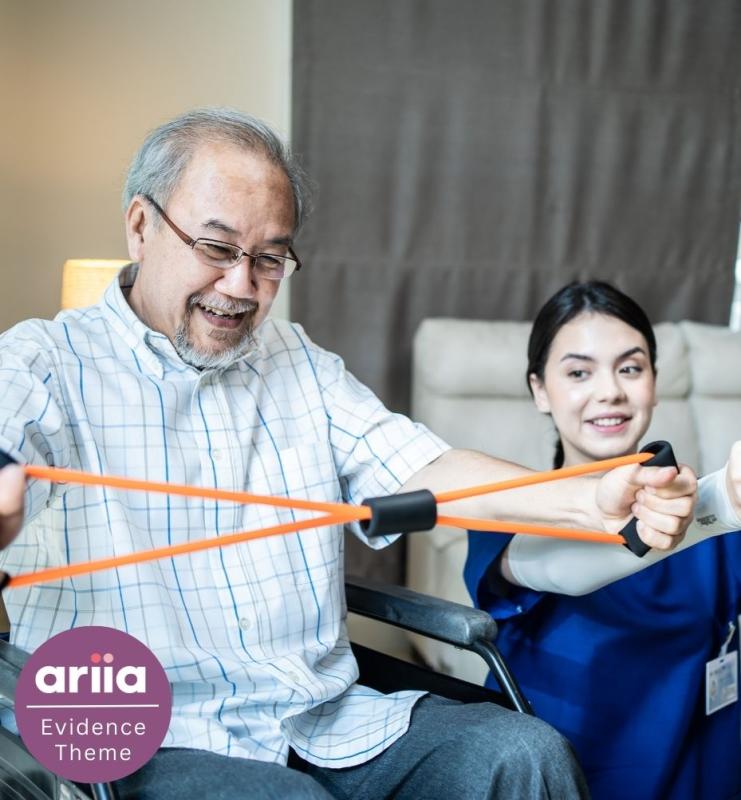
Dementia care: Physiotherapy
Physiotherapy uses a range of physical movement approaches to increase mobility, reduce pain and stiffness, and help people achieve their daily activities and have an improved quality of life. This resource from ARIIA is a short easy-to-read summary of the research evidence.

Dementia care: Pet therapy
Evidence from five systematic reviews found that pet therapy improved mood, response, engagement, and interaction, and reduced depression and the use of pain medication among people living with dementia. This resource from ARIIA is a short easy-to-read summary of the research evidence.

Dementia care: Person-centred care
Evidence from systematic reviews suggests that the person-centred care approach may reduce the number of falls experienced by people with dementia. This resource from ARIIA is a short easy-to-read summary of the research evidence.