Resources
Browse resources created and collated by ARIIA as a trusted, evidence-based guide to supporting innovation across the aged care sector.
Showing

My Health Record guidelines for residential aged care
These fit-for-purpose guidelines developed by the ACIITC, in collaboration with ADHA, ACSA, LASA, AHPA and ANMF, are designed to support aged care providers to register, connect and use My Health Record within their service delivery. Version 3 of the My Health Record Guidelines in RAC are now available.
Potential benefits of Age-Tech monitoring technologies in aged care
Age-tech is transforming aged care with real-time monitoring of vital signs, activity, and environment, ensuring older peoples' safety and independence. In our latest blog, Nadège Messier from Grand-App AI explains how AI-powered sensors can decrease risks for older people living at home in the community whilst enhancing communication and care coordination between their families and care providers.

RACF residents avoid hospital with virtual ED consultations
Phillip De Bondi highlights the success of the South Australian Virtual Care Service (SAVCS) in virtually connecting Emergency Department (ED) trained clinicians with residential aged care residents and staff. Through the use of these virtual consultations, alternative care pathways have been used to help residents in avoiding admissions to the ED and receive care without leaving their homes.

Top home care innovations in aged care
This report from Enkindle presents top home care innovations in aged care. It provides case studies and examples of technologies and creative service models, and how these can be used in the care setting. (Free registration required to receive report by email.)

Becoming digitally ready: A manual for aged care services
This manual from End of Life Directions for Aged Care (ELDAC) contains different evidence-based digital tools to support the aged care sector to make the best of technology to enhance care at the end of life. It covers the steps to digital readiness which includes assessing digital maturity, adopting digital tools and technology considerations.

Types of technology in aged care: Wearable technology
Aged care services are increasingly embracing innovative digital technologies to improve the care experiences of older people and to enable care workers to do more, even with fewer resources (e.g., staff, financial). This ARIIA information sheet on wearable technology is part of a series covering types of technology currently used in aged care.
Types of technology in aged care: Virtual Reality
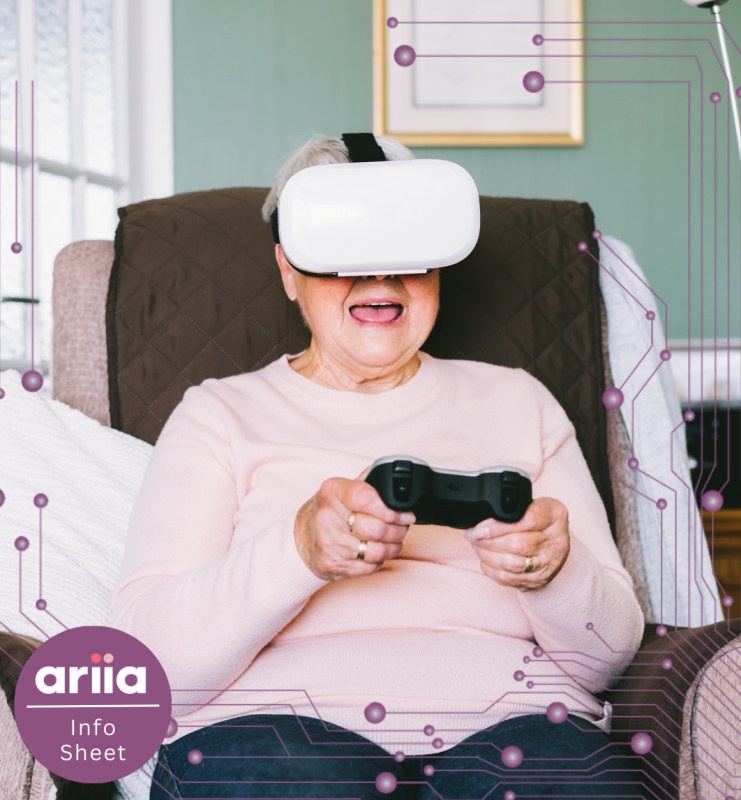
Aged care services are increasingly embracing innovative digital technologies to improve the care experiences of older people and to enable care workers to do more, even with fewer resources (e.g., staff, financial). This ARIIA information sheet on virtual reality is part of a series covering types of technology currently used in aged care.
Types of technology in aged care: Telehealth
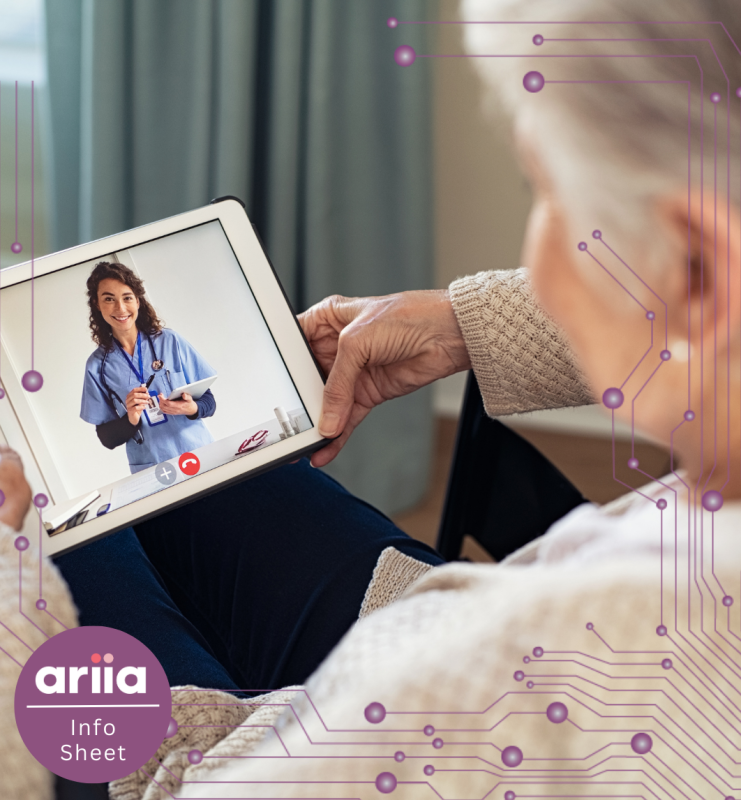
Aged care services are increasingly embracing innovative digital technologies to improve the care experiences of older people and to enable care workers to do more, even with fewer resources (e.g., staff, financial). This ARIIA information sheet on telehealth is part of a series covering types of technology currently used in aged care.

Types of technology in aged care: Social engagement technologies
Aged care services are increasingly embracing innovative digital technologies to improve the care experiences of older people and to enable care workers to do more, even with fewer resources (e.g., staff, financial). This ARIIA information sheet on social engagement technologies is part of a series covering types of technology currently used in aged care.
Types of technology in aged care: Smartphones and mobile Apps
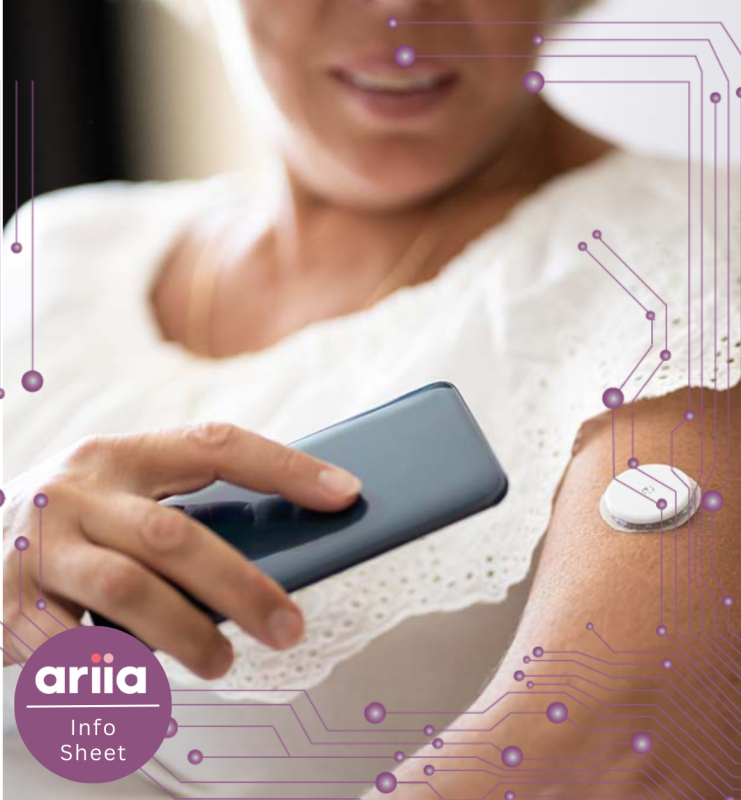
Aged care services are increasingly embracing innovative digital technologies to improve the care experiences of older people and to enable care workers to do more, even with fewer resources (e.g., staff, financial). This ARIIA information sheet on smartphones and mobile apps is part of a series covering types of technology currently used in aged care.